




Why would you need a voltage converter?
In Europe and many other countries, AC wall outlets are 220 to 240 volts. In the US, the standard AC outlets are 110 to 120 volts. If you’re a frequent traveler, you need to understand how the different voltage increments can affect your devices. However, most travel electronics are rated for dual voltage use and wouldn't require a converter.
Checking the AC Voltage on Your Device
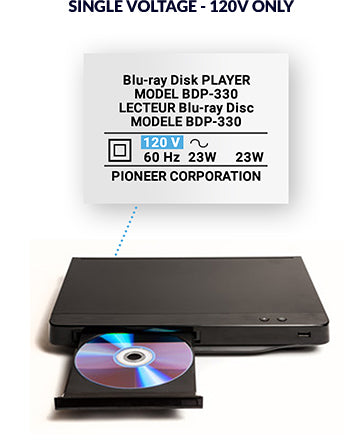
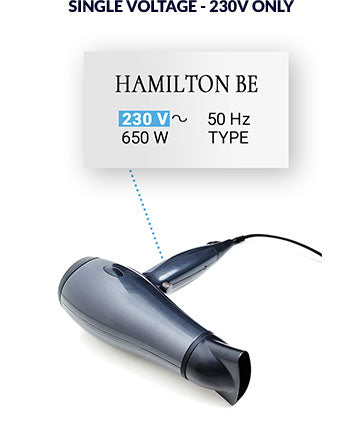
You can check a device’s AC input voltage range by looking at the spec label. The input voltage reading is a set of numbers followed by a “V” and the wording “INPUT.” If the voltage range is a single set of numbers, like 110V, the device can only handle outlets with that specific voltage.
When the voltage reading is listed as a range of numbers, like 110V–220V or 100-240V, the device can handle AC voltage outlets from all over the world. This is considered a “dual voltage” or “world-wide voltage” device.
Dual Voltage Devices - No converter required!
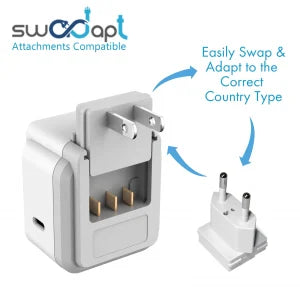
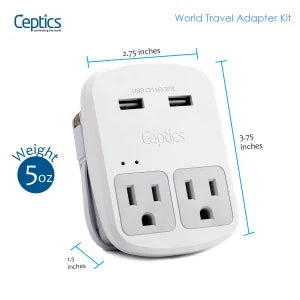
When you’re traveling with dual voltage devices, all you’ll need to pack is your Ceptics travel adapter. There’s no need to worry about voltage converters or transformers!

| Common Dual Voltage Devices |
|---|
| Chargers for products such as: |
| Cell Phones |
| iPhones |
| Galaxy |
| iPads |
| Tablets |
| Laptops |
| Macbooks |
| Most Battery Chargers |
Single Voltage Devices - converter required!
Single voltage devices, however, require both a travel adapter AND a voltage converter or transformer. To find out how to select the correct voltage converter or transformer, read our Voltage Converter Guide.
| Common single Voltage Devices |
|---|
| Appliances such as: |
| Mixers |
| Grinders |
| Blenders |
| Other travel electronics: |
| *Curling Irons |
| *Hair Dryers |
| *Straighteners |